These concerns reflect a growing demand for explanations that are concrete, evidence-based, and verifiable rather than broad assurances that operations are simply “safe.”
This crisis of confidence suggests that policy-based communication may no longer be enough to build lasting trust. Today’s mining operators must take a different approach: one that relies on thoughtfully designed health management systems that are comprehensive, transparent, and systematic. Such systems allow all stakeholders to monitor outcomes, verify findings, and engage in informed dialogue around community health using a shared set of facts.
A Data-First Approach
One approach gaining traction across the mining industry is the use of data as a central tool for community and social engagement.
Building a community health data system that is comprehensive, transparent, and participatory begins with addressing four fundamental questions:
- Is relevant community health data already being collected?
- If so, how credible and robust is that data?
- Can the quality of the data and its collection processes be strengthened through collaboration?
- And critically, how will the data be used to deliver value beyond routine reporting?
For mining operations or large industrial projects seeking to elevate community health management, these considerations can be further developed into three critical dimensions:
1) Designing comprehensive, continuous health data collection
Health data collection should not exist solely to meet reporting requirements. It should be designed to cover all age groups, be conducted regularly, and genuinely align with local needs.
2) Establishing data credibility
Health data should never rest solely in the hands of a single party. Independent institutions should be involved throughout the process, from data collection and analysis to reporting. This shared ownership ensures credibility across all stakeholders, including communities, public authorities, and mining operators.
3) Putting data into action
The most critical dimension is how data is used. Information should not remain confined to reports or dashboards; it must actively inform decision-making, guide planning, and support ongoing health management, ultimately becoming the lifeblood of the local public health system.
Case study: Chatree Gold Mine’s Community Health Surveillance System
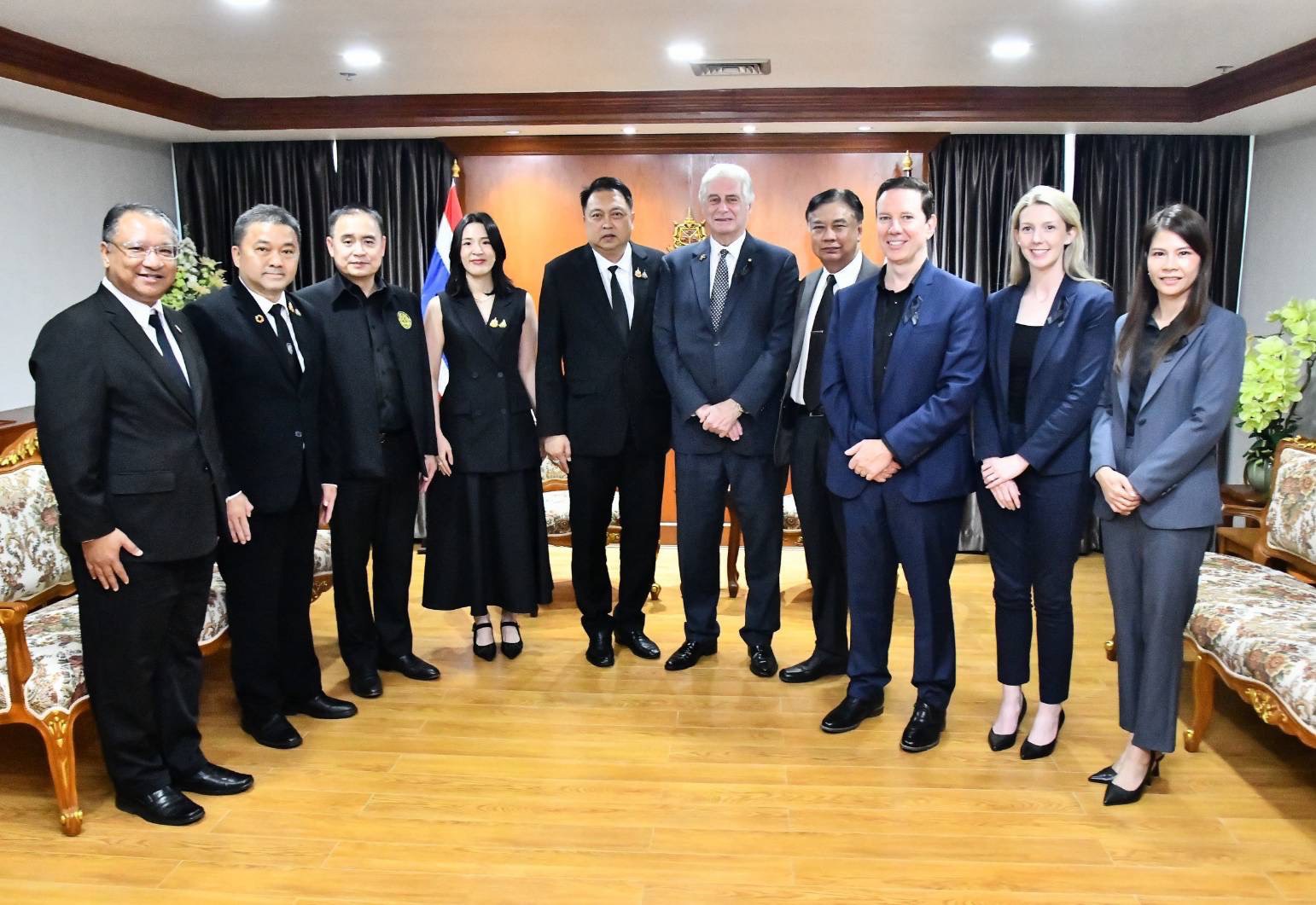
A practical example of these principles in action can be found in Thailand at the Chatree Gold Mine, operated by Akara Resources. From its inception, the mine’s community health surveillance system was designed to involve external stakeholders.
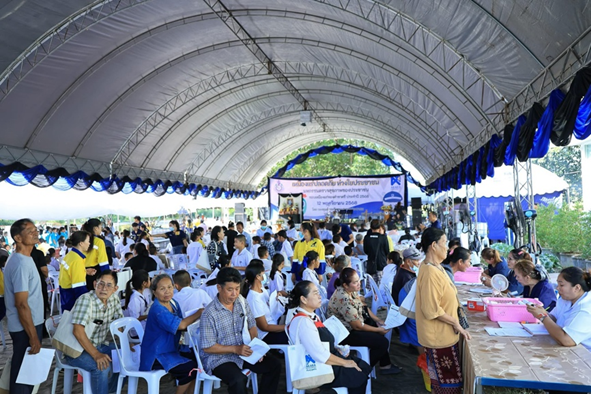
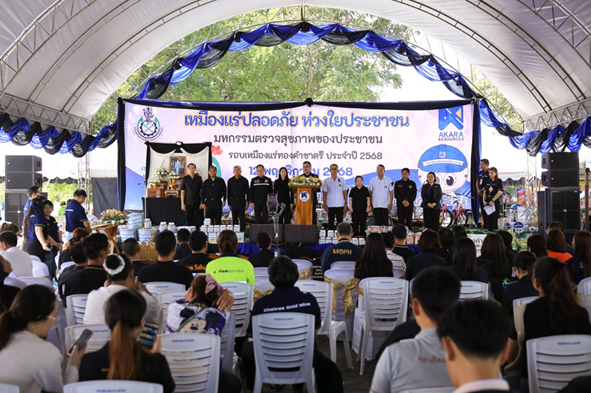
Each year, Akara conducts health screenings for residents living within a five-kilometer radius of the mine, in line with measures set out in the Environmental and Health Impact Assessment (EHIA). The program is carried out in close coordination with local Subdistrict Health Promotion Hospitals—such as Dan Chang and Dong Long in Phetchabun Province—as well as village health volunteers. Together, they support the appropriate identification of participants in accordance with Ministry of Public Health guidelines, while respecting the rights of individuals who prefer not to disclose their identities. Village health volunteers also play a key role in administering wellbeing questionnaires, ensuring that pre-screening data accurately reflects local health conditions.
The most recent round of screenings in 2025 involved more than 600 participants across all age groups, from young children to the elderly, including individuals living with chronic non-communicable diseases. The screenings covered 9 key health indicators, including liver and kidney function, complete blood counts, chest X-rays, and pulmonary function tests. It also included biomarker testing linked specifically to mining activity, namely manganese and cyanide levels in blood, and arsenic levels in urine. When such biomarkers are detected, samples are sent to Ramathibodi Hospital for further analysis at its accredited biochemical testing laboratory.
Once results are fully processed, physicians from local hospitals review the findings and provide guidance directly to community members. Individuals who wish to consult medical specialists may do so using their existing healthcare entitlements.
Notably, consolidated health reports are also shared with relevant authorities at the provincial, district, and subdistrict levels. This allows the data to support broader health monitoring and follow-up initiatives beyond the screening program itself.
As a result, health data does not remain in the hands of the company alone. Instead, it serves as a foundation for coordinated action to strengthen the local community health system.
From Structured Data to Leadership in Developing Community Health Infrastructure
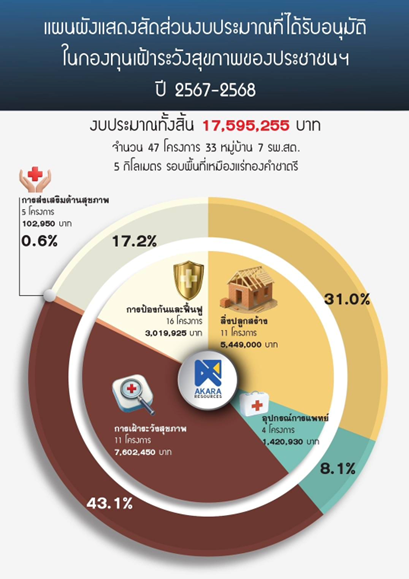
Another key factor that distinguishes the Chatree Gold Mine’s health surveillance system from conventional health screenings is how the data is linked to mechanisms that communities can actively use. Central to this is the Health Surveillance Fund, to which the company contributes an amount equivalent to 3% of mining royalties. The fund currently holds approximately 74 million baht and is managed by community representatives.
With decision-making authority in the hands of the community, major health initiatives, including the annual health screenings—are guided by local priorities. This completes a critical piece of the puzzle in building a sustainable public health ecosystem—one that brings together communities, public authorities, and mining operators to jointly steward local health. Ultimately, trust between the mining industry and surrounding communities cannot be built through words or communication alone. It must be deliberately constructed through systems that are transparently designed and open to genuine participation by all stakeholders.
Leadership in the modern mining industry is not defined solely by financial performance. It is defined by the ability to build foundational systems that support long-term community health around mining operations. When health data becomes a tangible lifeline that supports community wellbeing, mining earns recognition not merely as an operator, but as an organization that is genuinely part of the community.